
World Fisheries Day 2025: AFIWEL Advancing Fish Welfare in Africa
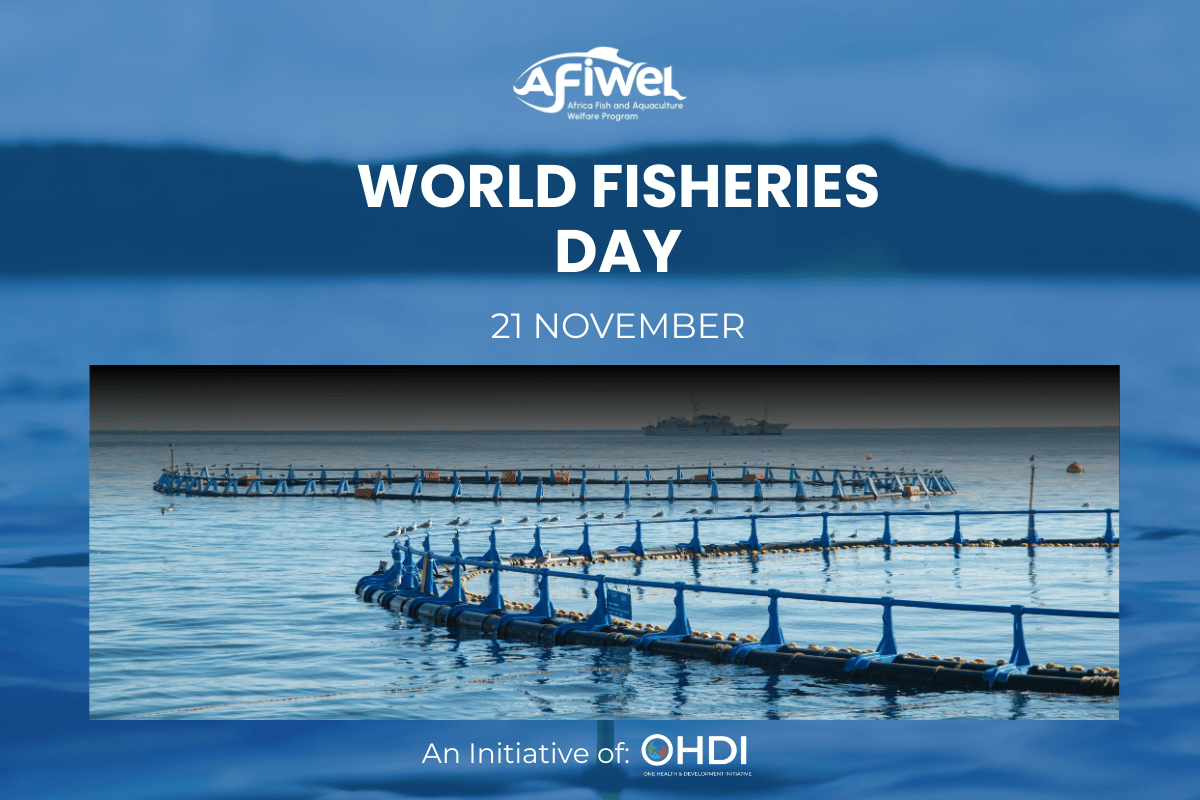
On this World Fisheries Day, AFIWEL, an initiative of the One Health and Development Initiative (OHDI) celebrates Africa’s fisheries and aquaculture communities; the farmers, processors, youth innovators, women traders, and small-scale fishers who sustain the continent’s blue food system. This day is both a commemoration and a reminder that Africa’s future prosperity depends on building aquatic value chains that are humane, sustainable, food-safe, climate-resilient, and economically fair for every actor involved.
Across the continent, a transformation is unfolding. Aquaculture is expanding, hatchery innovation is strengthening, and communities are increasingly aware of the importance of safe, traceable aquatic foods. National regulators are beginning to modernize inspection systems, improve compliance with SPS measures, and integrate aquatic animal welfare into policy discussions. Youth-led innovation in digital traceability, water quality monitoring, and cold-chain optimization is flourishing. Women processors are expanding their influence and entrepreneurship in regional markets, driving new waves of value-addition and nutrition improvement. These achievements demonstrate that Africa already possesses the creativity, knowledge, and resilience needed to sustain a vibrant Blue Economy.
Yet significant challenges remain. Climate change is reshaping aquatic ecosystems through warming waters, increased extreme weather, and unpredictable hydrological cycles, leaving small-scale fishers exceptionally vulnerable. Input costs remain unstable due to global conflicts, fuel price shocks, and supply chain disruptions, undermining farmer profitability. Gaps in biosecurity, hatchery standards, welfare practices, and feed quality continue to limit the performance of aquaculture enterprises. Food safety and traceability systems remain uneven, creating barriers to accessing both local and regional markets. These obstacles demand solutions anchored in science, digital visibility, welfare-driven management, and continental collaboration.
This is where the SAFE and RORE Systems are opening new opportunities for Africa’s fisheries and aquaculture sector.
The SAFE Framework – “Sustainably raised, Affordable, Food-safe, Ethically produced”, offers a coherent, African-grown model for unifying welfare, food safety, environmental responsibility, and fair market principles across value chains. SAFE enables producers to articulate their practices in ways that resonate with consumers, regulators, development partners, and financiers, shifting the conversation from survival aquaculture to ethical, climate-smart aquaculture that is competitive and future-ready.
Meanwhile, the RORE System – “Responsive One Health Resource Engine”, provides a transformative digital foundation for traceability, compliance, welfare documentation, and performance assessment. RORE allows farmers, processors, inspectors, and policymakers to access real-time and verified data; strengthening transparency, harmonizing standards, and enabling evidence-based decision-making. In a continent where fragmented data has long undermined progress, RORE offers a pathway toward continental alignment, stronger market trust, and improved access to trade corridors under the African Continental Free Trade Area (AfCFTA).
Together, SAFE and RORE are helping unlock new policy space across Africa. They give governments stronger tools to regulate welfare, food safety, and environmental integrity. They provide Regional Economic Communities (RECs) with the evidence needed for harmonized standards. They help financiers assess production risks and direct capital toward ethical enterprises. And importantly, they help farmers and processors demonstrate compliance, attract better buyers, negotiate fairer prices, and build reputational strength in both domestic and regional markets.
This continental movement is emerging alongside a broader shift in African consciousness: consumers are becoming more concerned about food safety, traders demand predictable standards, and young professionals recognize welfare and traceability as essential dimensions of modern aquaculture. Across Africa, this rising awareness signals a long-awaited pivot toward dignified, safe, and accountable blue food systems.
The opportunities under AfCFTA further expand this horizon. Harmonizing welfare-friendly production standards, transparent traceability protocols, and regionally aligned safety systems will allow fish and fish products to move more efficiently across borders, improve nutrition in food-insecure regions, and uplift smallholders through structured intra-African trade. SAFE and FORE form the backbone of this opportunity, enabling the continent to speak a unified language on quality, ethics, and compliance.
On this World Fisheries Day, OHDI calls for bold imagination and collective action. We urge governments, RECs, civil society, youth innovators, private investors, researchers, and community producers to embrace the tools and principles that can guide Africa into a humane, sustainable, and prosperous Blue Economy. By grounding our systems in welfare, science, fairness, and traceability, Africa can chart a new path where aquatic resources nourish people, protect the environment, and sustain dignified livelihoods.
Africa’s blue future is possible – SAFE, traceable, climate-smart, and built on the wellbeing of the people and animals who make it thrive. OHDI is proud to be part of this continental journey through the AFIWEL Program.