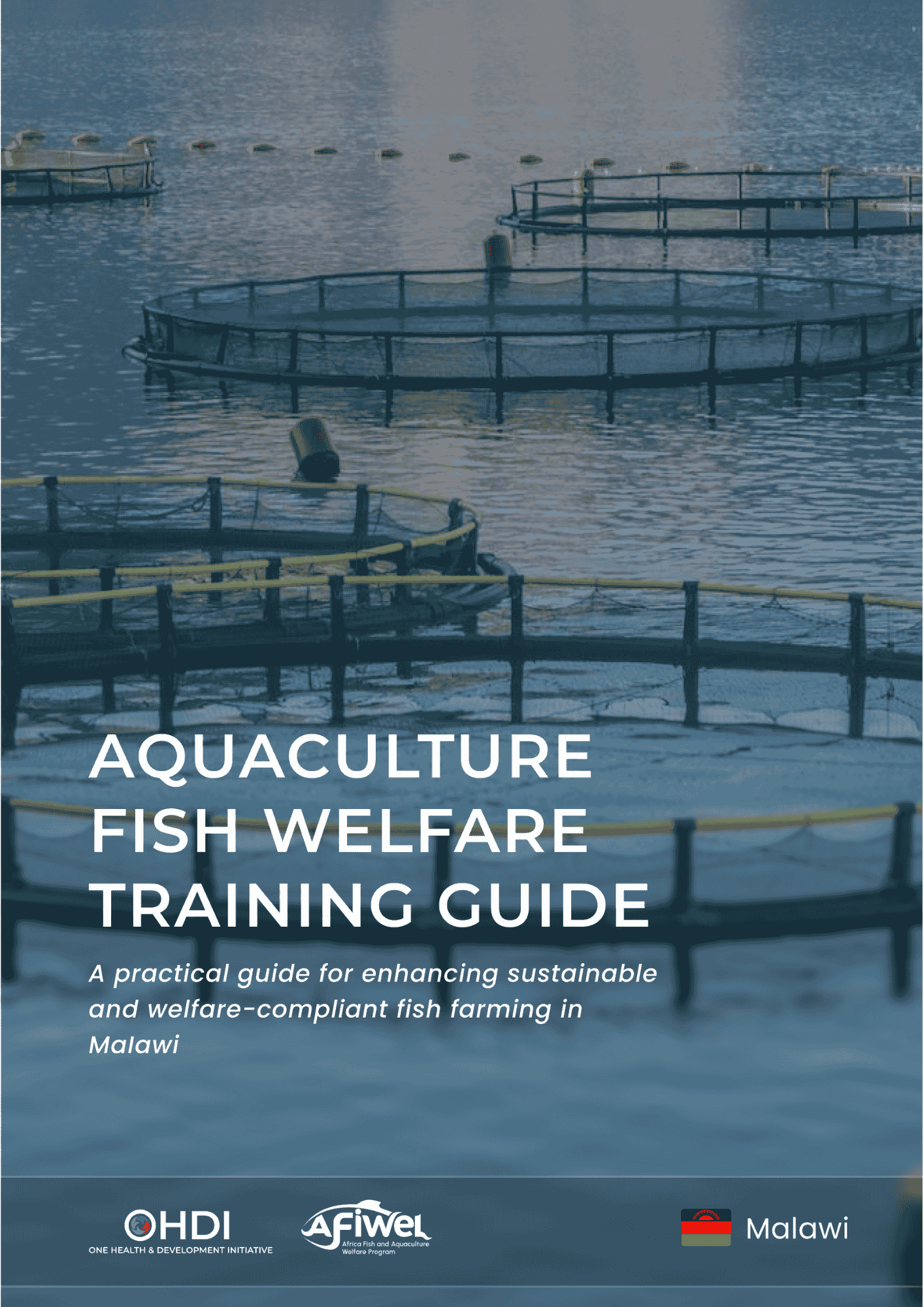
MALAWI FISH WELFARE TRAINING GUIDE
This Fish Welfare Training Guide, developed under the AFIWEL Fellowship, is tailored to Malawi’s aquaculture sector. It provides practical, evidence-based guidance for farmers, workers, and institutions, covering water quality, stocking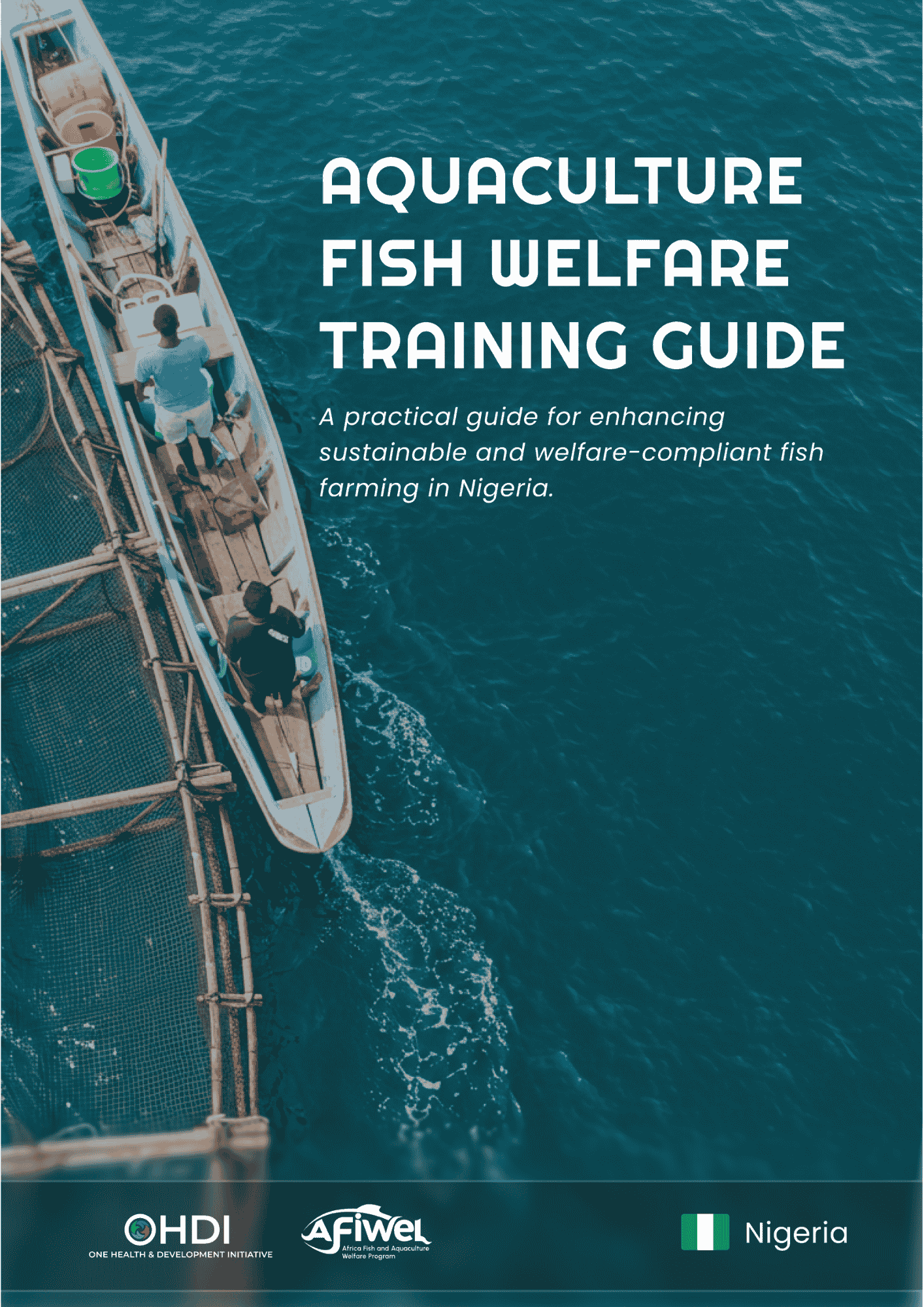
NIGERIA FISH WELFARE TRAINING GUIDE
This Nigeria training guide addresses aquaculture’s growth and welfare challenges, highlighting practices in water quality, feeding, stocking, handling, transport, and health management. Drawing on global and local insights, it equips
TUNISIA FISH WELFARE TRAINING GUIDE
This training guide enhances fish welfare in Tunisia’s aquaculture by presenting practical guidance on water quality, feeding, handling, transport, and health care. Drawing on local expertise and global standards, it
ZAMBIA FISH WELFARE TRAINING GUIDE
This Zambia-focused training guide advances fish welfare in aquaculture by presenting practical, evidence-based practices on water quality, handling, stocking, feeding, transport, health management, and humane slaughter. It empowers farmers, extension
GHANA FISH WELFARE TRAINING GUIDE
This guide enhances understanding of fish welfare within Ghana’s aquaculture, emphasizing responsible practices in water quality, handling, feeding, stocking, and health management. By equipping farmers and trainers with practical tools,
KENYA FISH WELFARE TRAINING GUIDE
This training guide introduces fish welfare principles in Kenyan aquaculture, emphasizing humane handling, disease prevention, water quality, and nutrition. It equips farmers, trainers, and stakeholders with practical skills to improve
UGANDA FISH WELFARE TRAINING GUIDE
The Uganda Fish Welfare Training Guide offers tailored insights into aquaculture practices, integrating welfare standards such as the Five Freedoms, Five Domains, and Five Pillars. It provides practical guidance on
Aquaculture production, GHG emission and economic growth in Sub-Sahara Africa
Aquaculture is a major source of protein in Sub-Saharan Africa (SSA), a region experiencing rapid population growth, changing lifestyles and preferences, and increased health awareness. However, the industry is still
The impact of sustainable aquaculture technologies on the welfare of small-scale fish farming households in Myanmar
This study analyzed the determinants and potential impacts of the adoption of sustainable aquaculture (SA) technologies on the welfare of small-scale aquaculture (SSA) households in Myanmar using an endogenous switching